
At Elsanor we distinguish two types of hens: purebred laying hens, which we select and produce on our farm, and industrial laying hens, which we buy from selected groups in Brittany. This article gathers our advice for living well, day to day, with purebred hens.
Two laying profiles
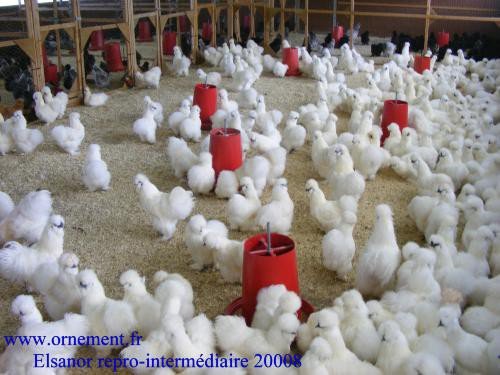
Ornamental hens are purebred laying hens which, in spring, provide 4 to 5 eggs per week. They can lay without a cockerel and, whatever the breed, the eggs are always edible, regardless of size and/or colour. Point of lay is between 4 and 7 months, depending on the hatching period and the breed (bantam breeds generally start laying earlier).
Industrial laying hens lay well for the first two years (up to 6 eggs/week), then laying drops sharply; ornamental hens can lay well up to 4-5 years. Industrial hens are also generally more active and have a 3 to 4 times greater impact on the garden. To compare our breeds objectively, see our published laying statistics, measured on our farm.
A hen's lifespan varies by breed, but on average it should be able to reach 10 years (the known record is 19 years).
Cockerel, breeding and brooding
Hens do not need a cockerel to lay, but one is essential to get chicks. For purebred young, make sure you have good, proven breeders of the same breed: keep them well separated by breed and/or variety. To be sure the cockerel placed with the hens fertilised the eggs, wait 3 weeks after setting up the breeding pen. When a cockerel treads a hen, she lays fertile eggs for 2 to 3 weeks.
For the species Gallus domesticus, incubation lasts 21 days, under a broody hen or in an incubator at 37.7 °C. A maximum of 14 days must be respected before setting an egg to incubate — on this topic, read our article Storing and pre-warming eggs. A hen can brood any gallinaceous eggs (pheasant, duck…).
Feeding and water
Food is given ad libitum: when the feeder is nearly empty, just refill it. Ideally, provide a continuous supply of suitable feed (chick / grower / layer feed by age) and optionally supplement with kitchen scraps and access to grassy runs. If you want to give a mash or scraps, wait until evening: it brings the hens in for the night and lets them sleep with a full crop.
It is important always to have clean water available. Siphon-type drinkers are best suited; moreover our birds are used to them.
Health, moult and behaviour
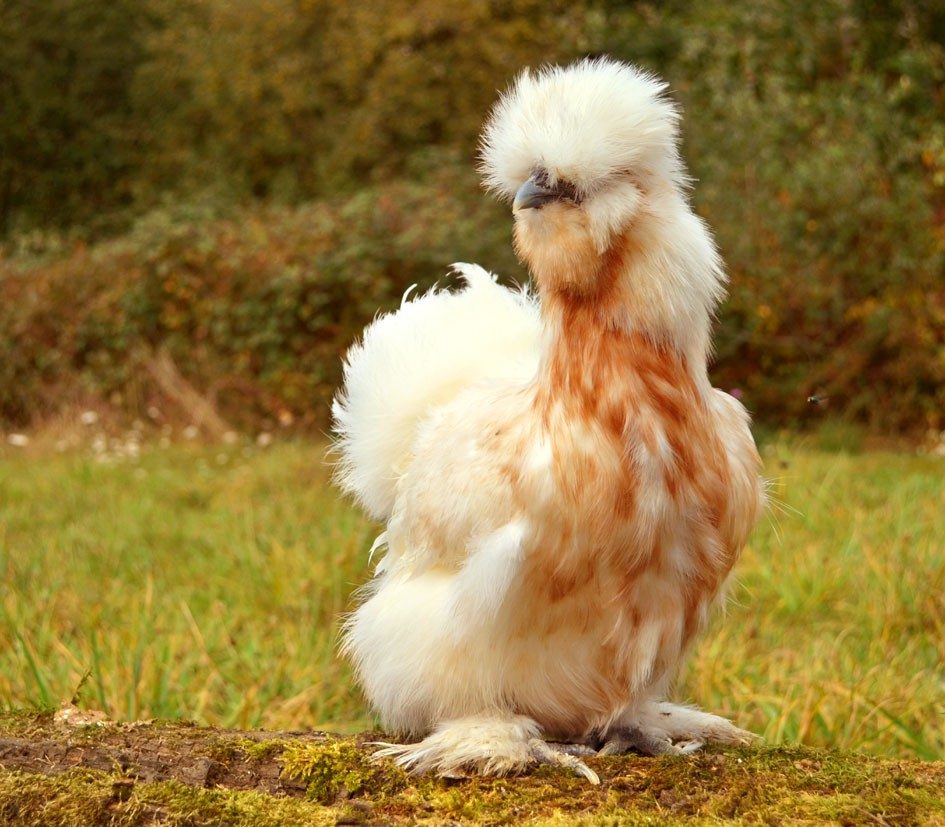
There are no great differences in disease resistance between breeds; however, the type of farming they come from can make a notable difference. Do not forget to worm your hens twice a year (wormers are available from your vet). Hens moult every year in autumn: all cut or soiled feathers are then replaced.
If a hen struggles to take to her new surroundings, lightly trimming the crest feathers around the eyes solves 90% of any issues. You can also trim the feathers of one wing to limit her ability to fly.
All hen breeds are easily tamed, but some are naturally more so than others: our choice of breeds was based on this criterion — the Bearded Silkie being the best-known example. If you let your hens loose in your garden (1 to 2 weeks after purchase), they will come back to their coop on their own; where predators are present, remember to shut them in at night and on days you cannot supervise. Some breeds will prefer to sleep on the roof or in a tree. For the breeds we raise, save for exceptions, the cockerels are not aggressive.
Note: the crowing of cockerels can cause problems with neighbours and regulations; hens cause no issue, except where local rules apply.
Further reading: Welcoming new hens: acclimatisation · Raising your chicks · Find a reseller
Cyril Névot — Elsanor farm