
Creating a new variety means bringing out a colour that does not yet exist within a breed. Given the number of existing varieties, creating a truly non-existent one is almost impossible! There are critics and supporters of creating new varieties, but that is not the point of this article. Still, keep in mind that the result must be an asset to the breed and must appeal to other breeders: what is the point of working for years on a variety if no one takes over?
Creating a variety can be achieved in three ways: mutation within a line, controlled cross-breeding between breeds/varieties, or uncontrolled cross-breeding.
Mutation within a line
On a fixed variety, a mutation can produce specimens of an "unconventional" colour: it may be a single youngster, or one of the breeders producing several such youngsters over the season.
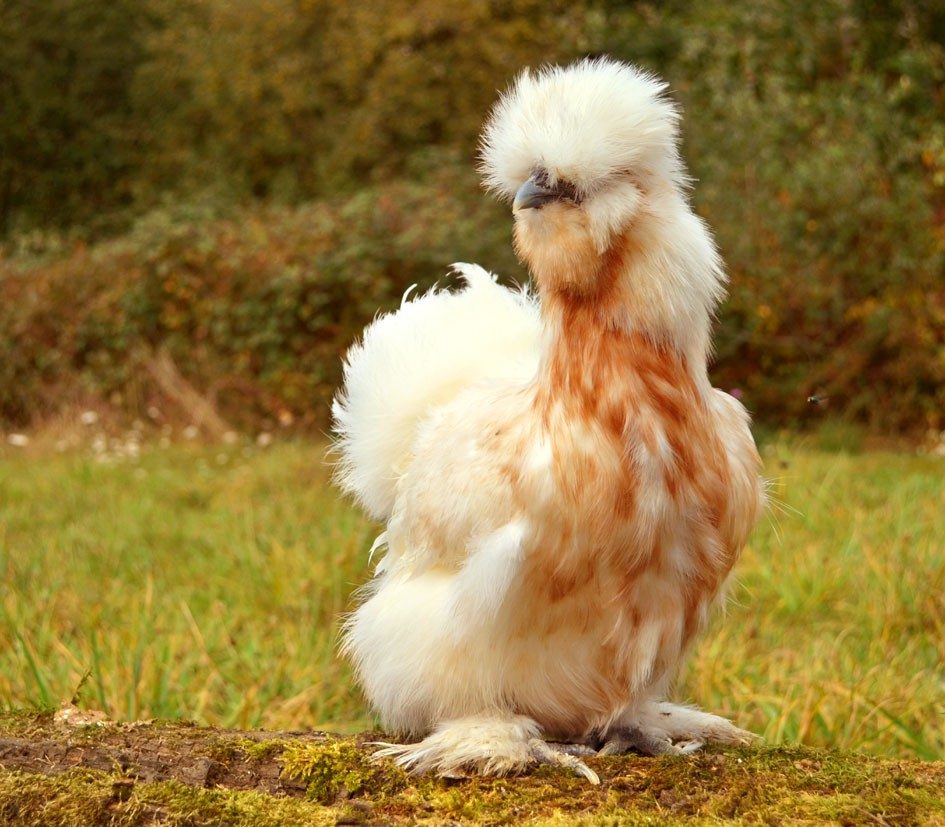
This happens regularly and I have worked on some of these mutations: bearded large-fowl Silkie in isabel and in white with fawn breast. The main issue with these varieties is inbreeding: usually born from the same parents, crossing them together weakens the new line very quickly. The isabel variety was very fragile and, lacking the facilities to introduce fresh blood at the time, I stopped it.
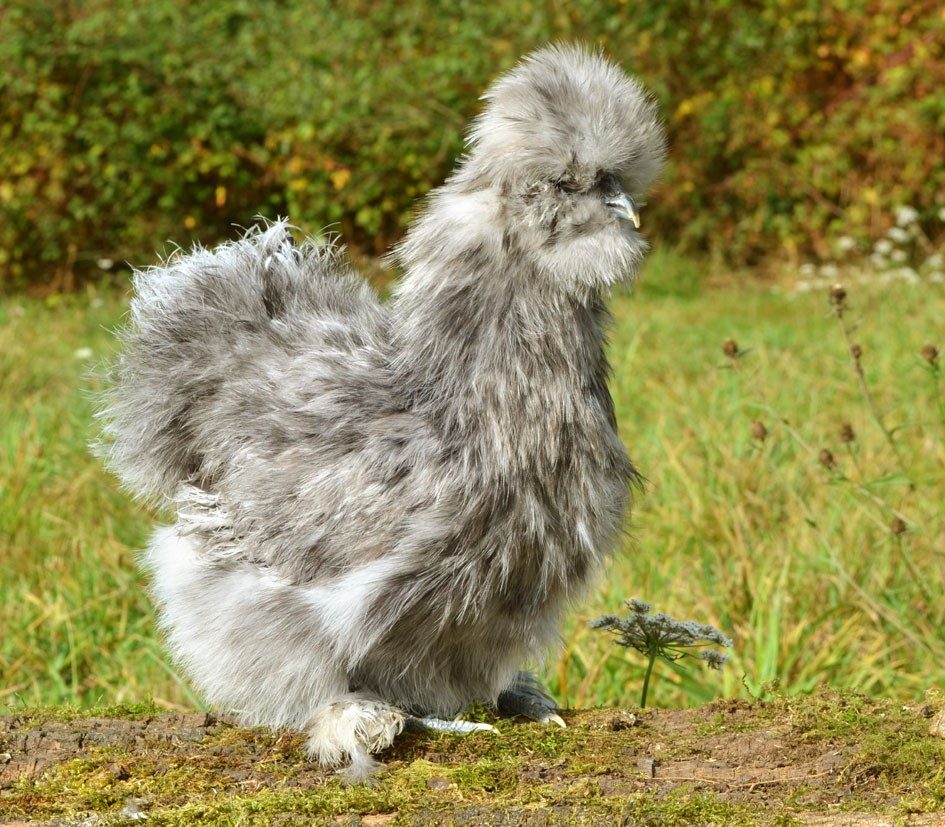
The white-with-fawn-breast variety quickly evolved into a variant I selected instead: the bearded large-fowl Silkie in white splashed fawn — a variety that, to my knowledge, has no equivalent in any other breed. It is not officially recognised to date and carries a name I chose myself, with no genetic value (a variety's name is often linked to the genes that define it).
The most "fun" mutation I obtained this way was a "Silkie" with silky plumage on one side and smooth on the other: the split between the two feather types was clean and perfectly centred!
Controlled cross-breeding between breeds/varieties
Depending on the goal, this method can be complex, even nearly impossible for breeders without the right facilities. There are crosses between varieties of the same breed, which are simple to perform. With this method I obtained the bearded large-fowl Silkie in white-golden partridge, based on theoretical reasoning.
It goes back a few years and, to be honest, I no longer recall the proportions, but I remember the method and now raise the result: it starts with a cross between two bearded large-fowl Silkie varieties — golden partridge and splash — giving a proportion of blue-golden partridge. These were all very dark and the distinction between golden and blue-golden partridge is not immediately visible, as the blue is very dark; lacking enough contrast, I do not offer that variety.
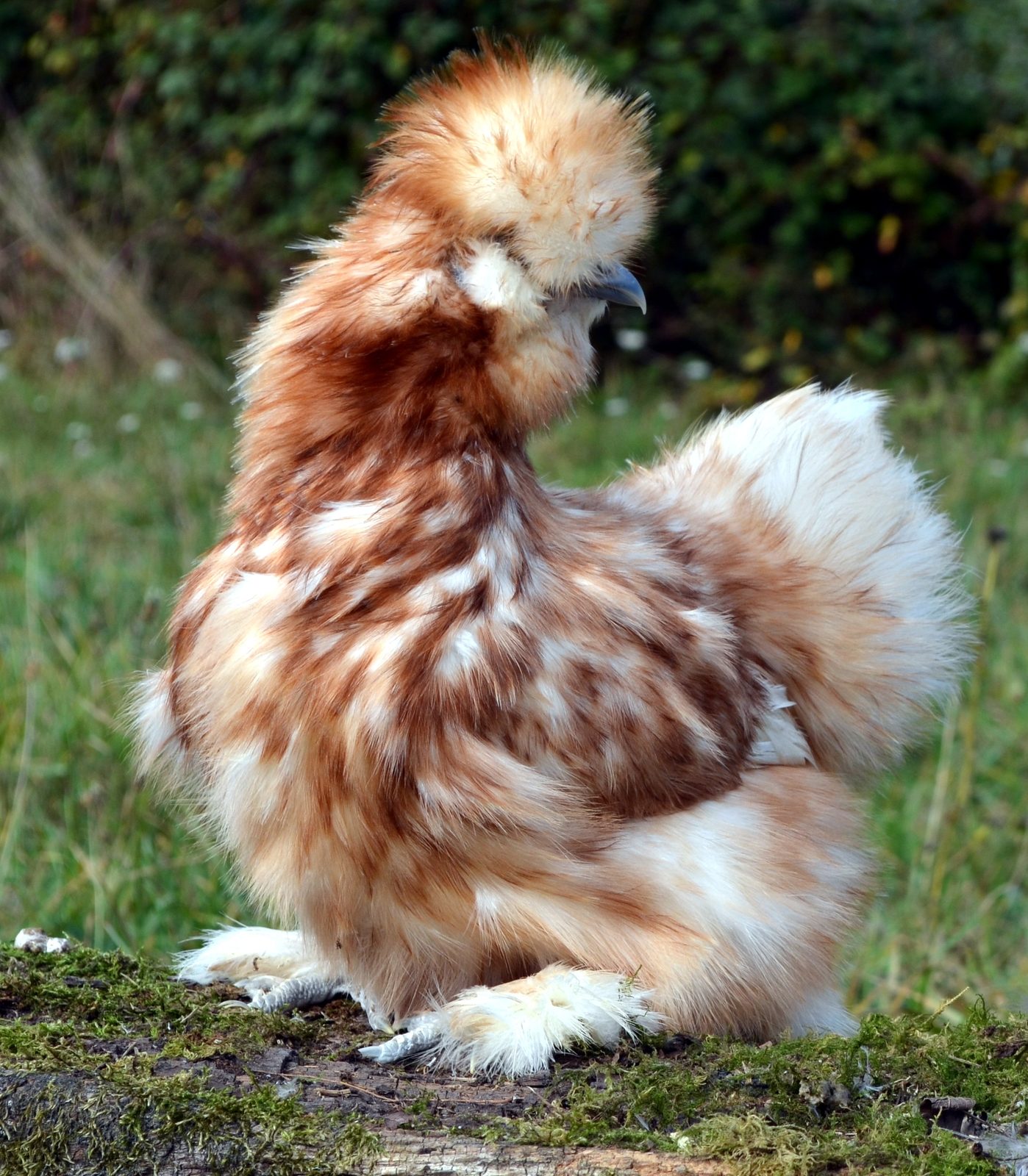
Then I crossed these blue-golden partridge together, which gave me 25% white-golden partridge. I remember my fascination watching my first youngsters develop: the colour was magnificent and totally different from anything else. This variety was in fact quite simple to create, but to my knowledge no one had attempted it before me; you now see it fairly often on social media, some giving it rather folkloric names such as "blue cream"…
A little anecdote: I showed this variety twice, the last time at the European Championship in Épinal; however the judge made a mistake, crossing out the variety name and replacing it with "blue-golden partridge". I tried to point out his error and he made it clear that, as a judge, he could not be wrong. A shame — it must have left some breeders puzzled when reading the card.
The second option in this method is to take a variety (or another feature) from one breed and "import" it into a second breed (the target breed). The further apart the two breeds are, the harder the selection. This can be extremely complex and many have broken their teeth on it: luck plays very little part and it can take more than 10 generations to fix the goal — or never reach it.
A little theory
Once you have set your goal, start with a cross between the target breed and the breed carrying the trait to recover (variety or other feature); let us take a recessive trait to illustrate the full complexity involved.
The first generation (f1) will generally be stable and carry the gene to import. Crossing this first generation together gives the second generation (f2), which brings out the gene in 25% of the youngsters (plus 50% carriers and 25% non-carriers of no interest to us). You then work with the specimens showing the gene, over 2 to 3 further generations, to select this gene — which will have been diluted along the way — while also selecting the target breed's genes, some of which will also have been diluted.
At this stage (5th generation) progress is slow, but the gene to import is stable: you then cross the resulting line back with the target breed and start the work again. This cycle — cross with the target breed, then the carrier generation, then 2-3 years of selection — may repeat several times depending on the two original breeds. It is a long selection requiring a great many chicks to hatch, with perfect mastery of the subject: suitable facilities are essential.
All this must also be done while securing the lines and with a minimum number of breeders to avoid inbreeding (at least 100 breeding hens per line and per generation).
Uncontrolled cross-breeding between breeds/varieties
I mention it for completeness, but this method is of little real interest: the aim is to create stable lines, and this method does not allow that.
Conclusion
Creating a variety is best left to breeders with some experience, as the lack of results can be discouraging. Before starting, ask the right questions: is this selection worthwhile, do I know everything I need to know… And the key point, too often overlooked: do you have the facilities to commit to it seriously?
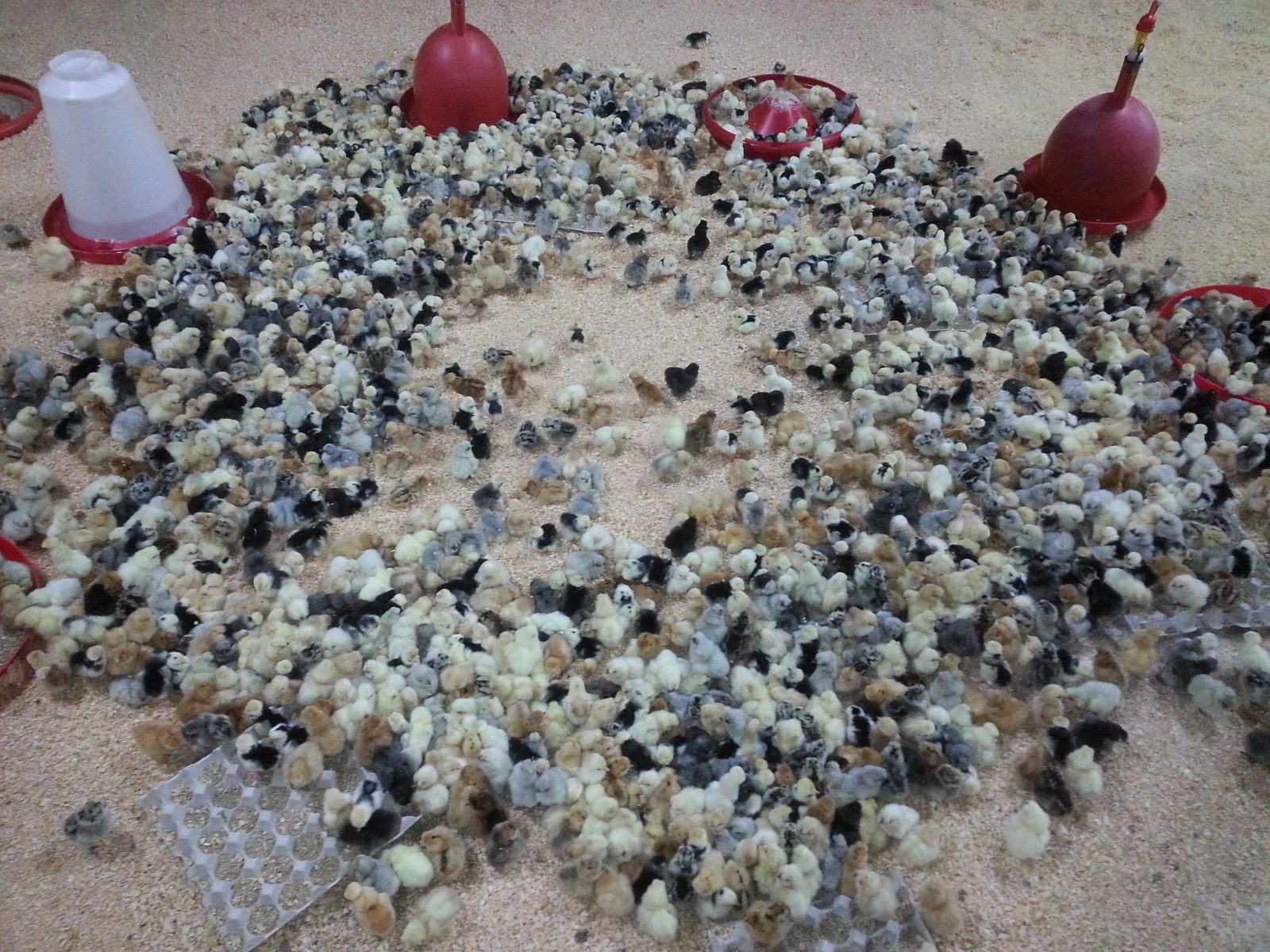
For selection work, count at least 100 chicks per line (for a fixed, quality breed/variety); for creation, ideally between 150 and several thousand chicks per year and per line depending on the level of work required.
When working on a new variety, it is important to share it quickly, even during creation (a kind of "backup" of the work in progress!), because many breeders have lost years of work: fox, theft, disease…
To select on solid foundations, your facilities must be suitable and available.
Further reading: Storing and pre-warming eggs · Our laying and hatching statistics · The breeds we select
Cyril Névot — Elsanor farm (December 2020)