
A purebred-hen selective breeder's goal is to improve a line, or at least maintain it, or even recreate it — with, in the end, the safeguarding of our genetic heritage as close as possible to the standard. But selection must be thought of over time: a line that interests only oneself, or that collapses under inbreeding, has little future.
Why select?
You must have a vision both of your objectives and of long-term maintenance. A breeder's motivations can be many:
- relaunch a lost breed or variety, or one with reduced numbers: a heritage safeguarding objective;
- improve on a show axis, with a certain competitive spirit;
- meet a desire for creativity: a new variety, or breed (far rarer) — a topic covered in our article Creating a variety.
These axes are not incompatible; respecting the standard and taking part in shows remains a common validation across these objectives.
Inbreeding: the trap of fast selection
Sustainability is too often neglected in favour of fast selection on a small population. Yet the impact of inbreeding is hard to manage in the medium term, and over the long term it can undo all the work accomplished. Taking the best cockerel and the 2 best hens is of limited interest: fresh blood must then be introduced very quickly and everything started again. For well-represented breeds, you can find birds from other breeders whose lines you know — but you are then entirely dependent on their own selection.
Keeping several lines
One solution to master this inbreeding is to keep several lines within the same selection, so as to cross them back regularly (every 5 generations at most) with suitable monitoring. The more base lines there are, the better the flock's longevity. This method demands great monitoring rigour, adequate facilities and time; the work can be simplified if several breeders collaborate.
A compromise must be struck between selection level and sustainability. Ideally, set a minimum number of hens per line: between 5 and 80 depending on your possibilities and the number of lines raised for the same variety. A line maintained with 80 hens undergoes almost no inbreeding impact.
Each breeder must choose: favour a limited number of lines guaranteeing a "volume" of production per line for sustainable selection, or multiply low-numbered lines — at the cost of regularly importing fresh blood, each time with the selection setback that entails. The right reflex: set a target of breeding hens, and deduce the number of breeds/varieties — hence lines — you can select effectively and sustainably.
Personally, I require a minimum of 80 hens per line. Some have been raised for over 20 years, and my selection keeps improving laying.
Another avenue, intergenerational crosses (father × daughter): I do not use them and, lacking hindsight, will not develop them here. Beware, too, of selecting the young: if you choose your breeders from the best birds across the whole season, you risk keeping only a small proportion of them — which accelerates inbreeding.
Preparing your future breeders
Health level and facility quality must match your rearing schedule. Many breeders produce as many chicks as possible over a long period (6-8 months), with all the risks this entails if the structure is not suited. Better to define a breeding schedule accounting for laying, objectives, structure and methods — to concentrate as many chicks as possible over a limited number of batches, and thus better manage prophylaxis and sanitary pressure.
For choosing the birds that will form the next generation, base this schedule on a restricted laying period: 2 months maximum, and select your breeders only on those chicks. Selection will be a little less demanding (fewer to choose from for an equal number of breeders), but you gain greater genetic diversity and more condensed ages — a plus for breeding. The work is slower, but in the long term laying holds better from one generation to the next and the need for fresh blood becomes far less pressing.
On my side, I make 2 batches 14 days apart for my future breeders: the first for the hens, the second for the cockerels. As cockerels mature faster, this gap prevents, for most of my lines, the hens being harassed before maturity.
A line's laying is therefore decisive and must hold over time: after several months of breeding, I must hatch in a single batch (2 weeks of laying) as many hens as I have in breeding — ideally at least 3 times the target to be able to select. This quickly becomes impossible when inbreeding is too strong. Our published laying statistics illustrate this line-by-line monitoring.
Introducing fresh blood, cleanly
To keep your line as pure as possible, do not put a new bird straight into it: rather create an intermediate line over one or more generations. Example: to introduce a new cockerel, set up a pen with a few hens from your line, while keeping your base line in parallel. From this intermediate line, keep only cockerels or hens depending on your objectives and the quality obtained; then integrate them into your line, or maintain the intermediate one a further generation. This is only one example: solutions vary by objectives, structure, monitoring tools and time available.
Concrete case: giving a tired line some "pep"
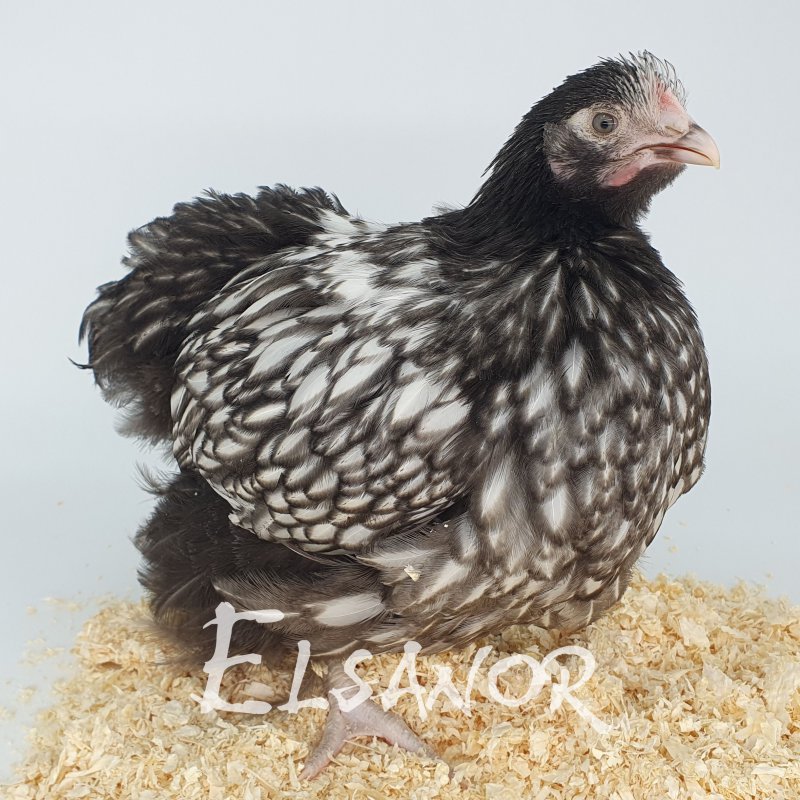
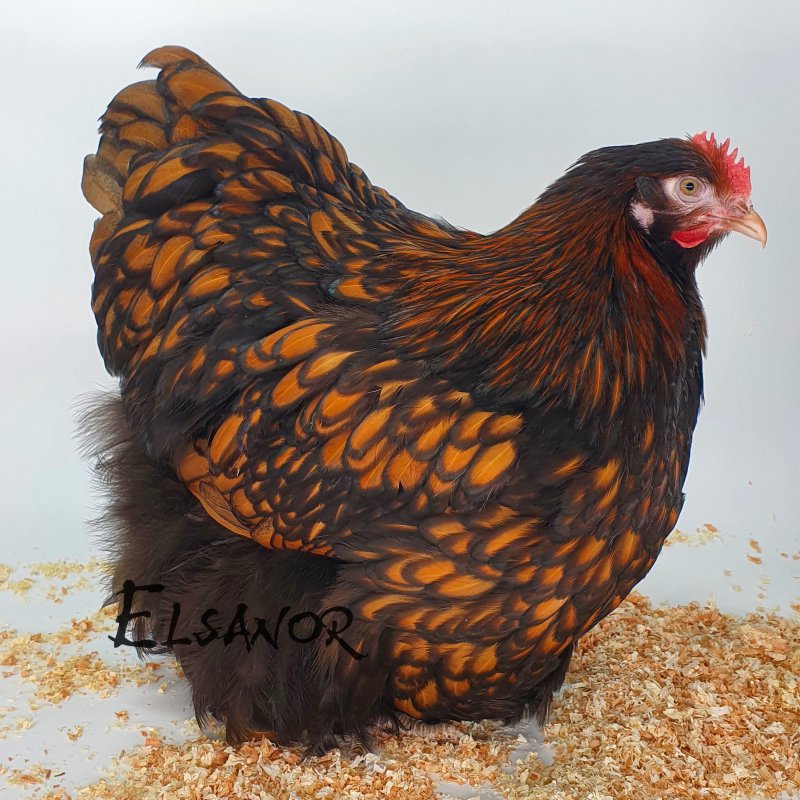
In 2020 I brought into the farm a line of silver-laced Orpington and a line of fawn-laced Orpington. From 2021 they joined our breeding building and our monitoring tool. Over 2022 and 2023, two building changes (up to the current one) altered rearing conditions — which explains the gaps visible in the laying curves.
The Orpingtons had the lowest laying rates among our lines. To remedy this, in 2023 I created an intermediate line by crossing the two varieties (silver-laced hen × fawn-laced cockerel), obtaining "lemon" cockerels and fawn-laced hens. The number of breeders had been calculated to cover 2/3 of my cockerel needs for the 2024 season, on my 2 base lines. The aim: to restore as quickly as possible the laying level needed for good selection.
In 2025, at least 2/3 of the breeding hens come from these "lemon" cockerels: the improvement in laying is substantial, without really altering the quality of the lacing — the point that worried me most. There was also an impact on growth and fertility. As the lines are raised with a minimum of hens, this laying rate is now "acquired" for many generations. The best way to see it remains reading our Orpington laying curves.
Further reading: Creating a variety · Storing and pre-warming eggs · Our laying and hatching statistics
Cyril Névot — Elsanor farm