
Behind every chick that joins your coop, there is a method. At Elsanor, starting a batch is never improvised: it follows a precise, written protocol, applied day after day — because the first weeks determine the health and vigour of a whole generation. A short look behind the scenes, without jargon.
It all begins before arrival
When a batch of chicks arrives, the brooder house has already been ready for several days. The building is washed, disinfected, then heated in advance so the temperature is perfectly stable at installation. Nothing enters without being clean: dedicated shoes, washed hands, cleaned equipment — sanitary rigour is the chicks' first protection, well before any treatment.
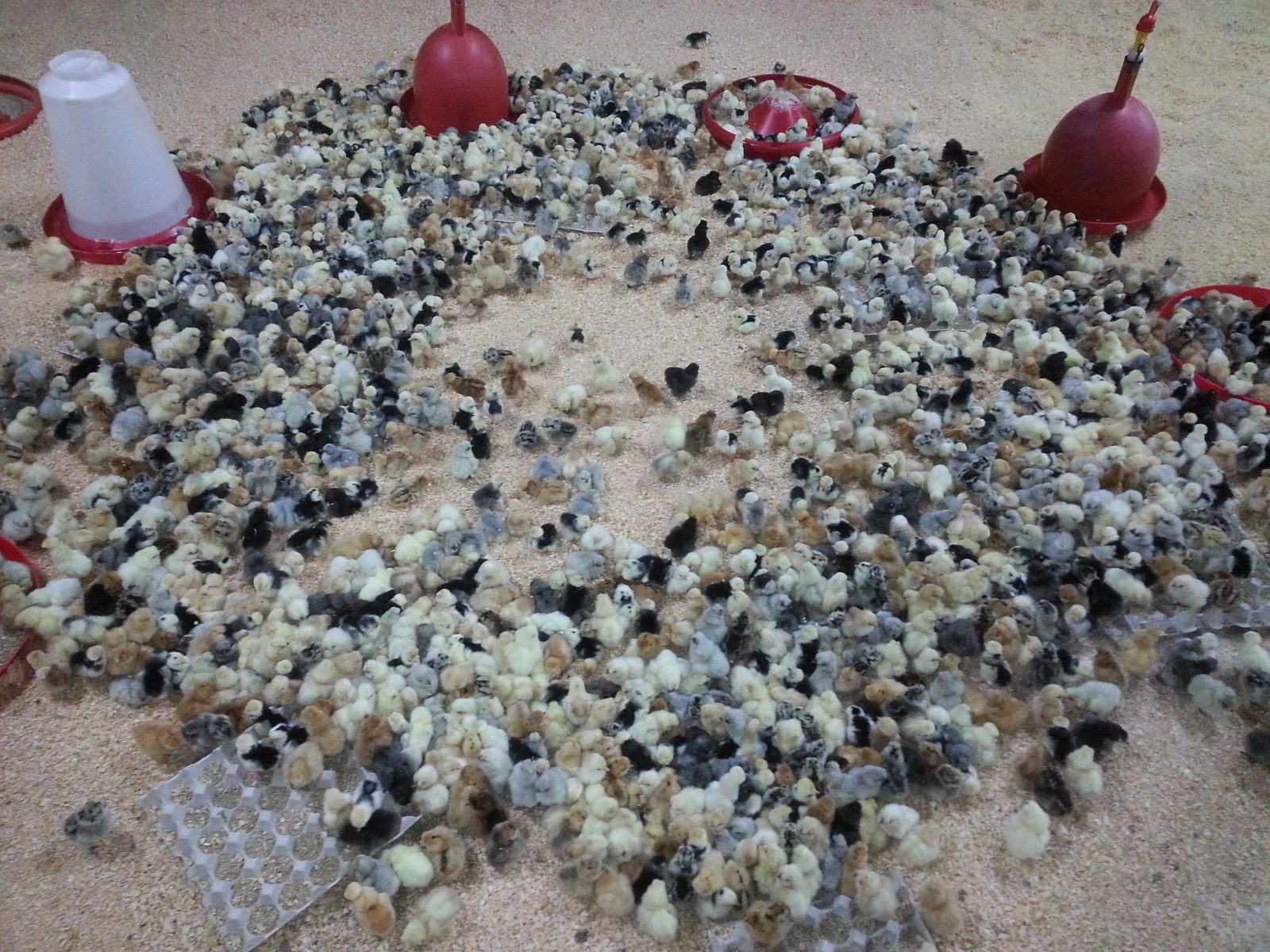
Water and feed are laid out to a precise plan, as close as possible to the heat sources, so every chick finds something to drink and eat from its first steps, without having to search.
Installation day
This is the key moment. Everything is checked: light, temperature, water height, access to feed. The chicks are placed right next to the water and food. The breeder's first reflex, then, is to observe: a chick behaving normally eats, drinks, explores and spreads out well in the space. This is what we detail for private keepers in our article Raising your chicks — the same logic of reading behaviour, at the scale of the living room as of the building.
Day-by-day monitoring
The brooder house is visited every day, from the first to the last day of the batch — the work is simply more meticulous at the start. The routine is the same: cleaning the water, checking the feed, inspecting the equipment and attentively observing the chicks. Every detail counts: the felt temperature, the spread across the space, appetite, behaviour. At the slightest sign, we adjust at once — heat, water, feed, ambience — so the chicks always stay in the best conditions.
This constant attention is no small thing: it is what guarantees healthy, homogeneous birds, and it is this demand you then find in our published laying statistics, measured line by line.
Why so much care?
Because a well-started chick becomes a solid hen. A farm's quality does not play out only in genetic selection: it is also built in these repeated gestures, these checks, this constant attention. It is our profession — and it is the guarantee, for you, of receiving birds raised in the best conditions.
Further reading: Raising your chicks · Selection and line sustainability · Discover our breeds
Cyril Névot — Elsanor farm